

A listing for a ready property for sale can suggest a straightforward move or investment, but the label alone doesn’t establish the property’s condition, suitability or readiness for transfer. In the UAE, a considered decision starts with details you can verify, not simply what the description promises.
A completed property lets you view the actual space and may suit plans for nearer-term use. An off-plan purchase may suit buyers planning around a future handover. Neither option is right for everyone. This guide explains the practical differences, what to assess during a viewing and how to compare a property with your personal, business or investment priorities. It also covers details to review before proceeding, from the property’s condition and ownership costs to the transaction steps involved. Terra Firma’s advisors support ready-property acquisitions across the UAE, helping buyers compare options, negotiate and coordinate the purchase through transfer.
Key Takeaways
- Separate completion, viewing access, vacancy and possession timing before treating a property as ready.
- Compare a ready property for sale with off-plan against your preferred timeline, need to inspect the finished property and comfort with delivery uncertainty.
- Assess each shortlisted property against its intended use, essential requirements and visible condition before weighing cosmetic preferences.
- Distinguish what you can see during a viewing from ownership details and claims that need documentary or professional verification.
- Transaction advice can help align property selection with your priorities and coordinate the purchase from enquiry through transfer.
What does ready property for sale mean for a buyer?
A ready property for sale is a completed property offered for purchase. Its availability and possession depend on the circumstances of that property and transaction. Completion means construction has finished; it doesn’t, by itself, confirm that the property is vacant, can be transferred immediately or is available for occupation on a particular date. Establish those details separately as part of your assessment.
Think of readiness as a set of distinct questions: Is construction complete? Can you view the actual property? Is it vacant or occupied? What possession timing has been agreed? A property can be complete and viewable while still occupied, so consider its listing status alongside property-specific information. For a general introduction to property and its different forms, see What is Real Estate?
Ready status describes completion, not a promise of immediate move-in. Keep that distinction in mind when comparing listings. Confirmed possession timing matters whether you’re buying a home, considering a commercial space or assessing a property for investment. Don’t treat a completion label as a substitute for clear information about availability and the steps needed to proceed.
When is a property genuinely ready to buy?
A completed building and a property ready for transfer or occupation aren’t necessarily the same thing. Completion describes the state of construction; transfer and possession depend on the individual property and transaction. A home may also remain occupied after construction is complete. Review the listing status alongside the specific property details rather than relying on one label to establish when you can take possession.
Look for clarity on what “ready” means in the listing. Does it confirm completed construction, viewing access, vacant status or an agreed possession timeline? Treat each as a separate point. If any of these details affect your plans, include them in your transaction review before moving forward.
What can a viewing reveal that a listing cannot?
A viewing lets you assess the finished space directly. Check room proportions, whether the layout supports your intended use, the visible condition of finishes and any maintenance issues that may need closer attention. Photographs can help you shortlist, but they may not show how rooms connect or how the space feels in person. Compare the listing images with the property you visit, and note any differences to follow up on.
A viewing is a practical assessment, not a substitute for ownership and transaction checks. A visible mark or the dimensions of a room are observations; other details require documentary or professional verification. Consider both the experience of the property and the information needed to assess the purchase properly.
How ready property differs from off-plan property
The central difference is what you can assess today. A ready property can be inspected in its completed state, while an off-plan purchase is made before the property is delivered. Each route involves a different balance of visibility, timing and uncertainty. Compare them against your intended use rather than assuming one is automatically preferable.
A ready property is a visible existing asset; an off-plan property is a planned future asset. That distinction shapes what you can see before committing and how well the expected timeline fits your plans.
| Consideration | Ready property | Off-plan property |
|---|---|---|
| Visibility | You can assess the completed property in person, including its layout and visible condition. | You make your decision before the finished property is available to inspect. |
| Timing | Construction is complete, but transfer, vacancy and possession timing depend on the property and transaction. | Use depends on future delivery, according to the specific project and its terms. |
| Uncertainty | You can evaluate existing features directly, while ownership and transaction details still need review. | You assess plans and delivery information, with the finished property still to come. |
| Customisation | Choices are generally limited to the property as completed. | Design-stage choices may be possible for some projects, subject to their terms. |
| Buyer priorities | May suit buyers who value direct inspection or are considering nearer-term use. | May suit buyers comfortable purchasing before completion and planning around future delivery. |
These are broad distinctions, not guarantees about an individual purchase. The National Association of REALTORS® offers general real estate resources for buyers. For a UAE purchase, base your decision on the specific listing, project information and transaction details.
Which buyer priorities favour a ready property?
A ready property may appeal if you want to experience the actual space before deciding. You can examine room proportions, completed features and visible condition rather than relying only on plans or descriptions. This is useful when comparing a home with your needs or assessing a commercial property for its intended use. A completed property may also fit nearer-term plans, but completion alone doesn’t confirm when transfer or possession will occur.
When might an off-plan purchase suit better?
Off-plan may suit buyers who are comfortable purchasing before construction is complete and whose plans allow for future delivery. Depending on the specific project and its terms, design-stage choices may be available. Weigh these possibilities against your timeline and the information available before completion. For a deeper assessment of that route, explore the separate off-plan guide. If you’re comparing completed options, explore ready property options with your intended use and priorities in mind.
How to evaluate a ready property for sale before choosing
Start with the purpose of the purchase. A home for personal use, a business asset and an investment acquisition each call for different priorities. Set those priorities before comparing finishes or marketing descriptions. Then assess the property across four areas: suitability for your intended use, visible condition, location context and ownership details.
A sound shortlist matches intended use, verified details and observed condition. Keep what you can see separate from what needs evidence. You can assess an interior during a viewing; ownership information, transaction details and ongoing obligations need a different kind of review.
- Intended use: Consider how the layout, space and practical features support your plans.
- Condition: Note visible finishes, fixtures and signs that may warrant closer attention.
- Location context: Assess how the setting across the UAE fits your access, connectivity and nearby-service priorities.
- Ownership and obligations: Review relevant ownership and transaction information, and account for applicable service charges and other property-specific responsibilities.
Does the property suit your intended use?
Define the role the property needs to serve. For a home, consider whether the layout and available space work for your daily routines. For a business asset, assess whether the configuration supports the activity you have in mind. For an investment acquisition, compare the property and its obligations with your own criteria without relying on predictions about rental demand, resale performance or returns. A broad description such as “ideal investment” doesn’t replace a fit assessment.
What should you inspect during a ready-property viewing?
Look closely at finishes and fixtures, the condition of surfaces, how natural light reaches the rooms and any signs of maintenance needs. Compare the property with its listing description and photographs. Note differences or unclear points. A viewing helps you assess what is observable; it doesn’t settle documentary questions or establish the full condition of elements that aren’t visible.
Which details need documentary or professional review?
Separate observations from claims. You can note a visible mark or confirm that a room has the features shown during the viewing. Ownership details, transaction documents, permitted use and stated property obligations need appropriate documentary or professional verification. Review applicable service charges and other relevant costs using current figures for that specific property. Don’t assume a general description or estimate applies to the property you’re considering.
Keep a concise record of questions from the viewing and carry them into transaction review. This helps you compare options using evidence as well as presentation, and keeps the decision focused on whether the property fits your plans.
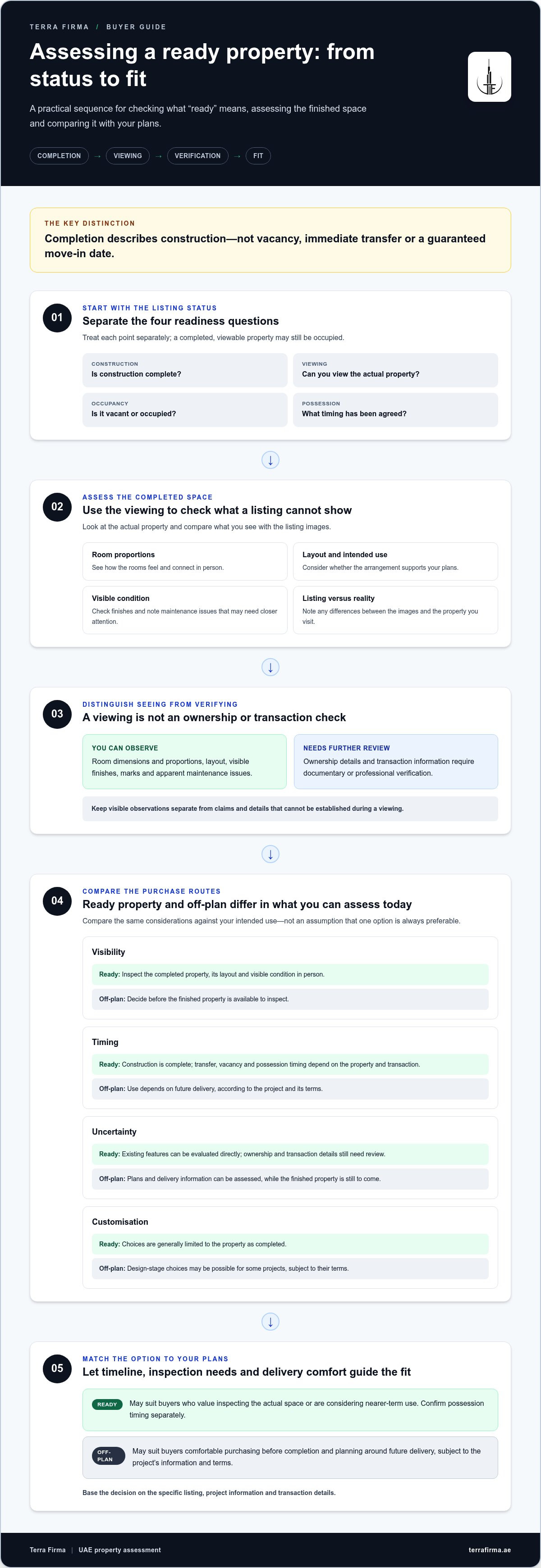
A practical decision process for shortlisting ready properties
A clear shortlist begins with purpose, not presentation. Define what the property must do for you, then compare each option against the same essentials. This prevents a polished finish or appealing photograph from outweighing practical fit, condition or details that still need review.
- Define the intended use. Decide whether you’re looking for a home, a business asset or an investment acquisition. Let that purpose shape every later comparison.
- Set your non-negotiables. Identify the property type, layout, usable space and condition requirements that are essential. Keep these separate from preferences you could trade off.
- Establish your review criteria. Choose consistent factors for comparing properties, such as suitability for use, visible condition, location context across the UAE, ownership information and applicable obligations.
- Build an initial shortlist. Use listing details to identify properties that appear to meet your essentials. Treat descriptions as a starting point, not a substitute for viewing or verification.
- Review each candidate in person. Use the same criteria at every viewing. Record practical observations and note where the property differs from its listing.
- Bring the evidence together. Compare viewing notes and listing details with relevant, verified transaction and ownership information before deciding how to proceed.
How to turn buyer priorities into a shortlist
Write down what a suitable property needs to offer before browsing further. For a home, that might be a layout that supports your daily routine; for a business asset, it may be space configured for the intended activity. Separate essentials from preferences such as a particular finish. Score each candidate against the same criteria, so the comparison reflects fit rather than first impressions.
How to move from viewing to a considered decision
After each viewing, review your notes while the details are fresh. Compare your observations with the listing, and flag unanswered questions about the property or ownership for transaction review. Then assess the information consistently across your shortlist. A UAE property buying checklist can also help organise broader purchase preparation alongside your property-specific review.
A disciplined process turns a ready property for sale search into a considered comparison, not a reaction to presentation alone. Terra Firma’s advisors tailor transaction guidance to your intended use and priorities, and coordinate purchase steps from enquiry through transfer. Explore ready property guidance as you refine your shortlist.
How Terra Firma supports a ready property purchase
Choosing a property is only one part of a considered acquisition. Terra Firma supports buyers across the UAE seeking ready residential or commercial property, helping connect their priorities with suitable options. Whether you’re looking for a home, a business asset or an investment acquisition, guidance can keep the process focused on intended use and the details that matter to you.
Support can extend from property selection and negotiation through transaction coordination. Terra Firma helps buyers assess options, understand the steps involved and progress through the purchase with a clearer view of what needs attention. Brokerage advice can inform a decision, but it can’t guarantee a purchase outcome or investment performance.
What transaction advisory can help buyers navigate
Start with your shortlist and intended use. Terra Firma’s advisors help buyers consider how available ready-property options align with their requirements, then provide negotiation support as the purchase progresses. Transaction coordination brings the steps from enquiry through transfer into view, connecting property selection with the process.
Review property-specific details and applicable transaction requirements for each acquisition. Current information matters: consider listing status, ownership details and relevant documents in the context of the individual property and transaction. This keeps the decision grounded in the particulars of the purchase rather than general assumptions.
- Selection: Relate your intended use and priorities to the properties under consideration.
- Negotiation: Receive guidance as you consider terms for a potential purchase.
- Coordination: Keep the transaction steps organised from enquiry through transfer.
How to take the next step with confidence
Share the type of ready property you’re seeking and what you want it to achieve. A clear brief could include whether you’re considering residential or commercial property, your essential requirements and the priorities shaping your decision. This gives the selection process a practical foundation and keeps attention on options that fit your intended use.
As you move from enquiry toward a decision, Terra Firma guides buyers through acquisition steps, negotiation and coordination through transfer. Keep your questions and property-specific information together as the transaction advances, and review details in line with the requirements that apply to that purchase. The result is a more informed process, not a promise of a particular outcome.
Explore Terra Firma’s property services and take the next step toward finding a ready property for sale that aligns with your priorities.
Make your next property decision with clarity
Turn your priorities into a focused brief. Decide what the property needs to support, which requirements are essential and what details you’ll want resolved before moving forward. That clarity can keep your search for a ready property for sale aligned with your plans, rather than swayed by presentation alone.
Terra Firma advises buyers on ready residential and commercial property acquisitions, with guidance tailored to the purpose behind each purchase. Its brokerage coordinates purchase steps from enquiry through transfer, connecting selection, negotiation and transaction progress. The aim is informed decision-making, not a promise of a particular purchase outcome or investment performance.
Keep your intended use and essential criteria in view as you compare options. Explore ready property opportunities with Terra Firma and take the next step toward a property that fits your priorities.
Frequently Asked Questions
Is a ready property always available for immediate occupation?
No. “Ready” generally indicates that construction is complete, but the property could still be occupied or have a possession date that doesn’t match your preferred move-in schedule. Before making plans, establish whether the current occupant has vacated, what handover arrangements apply and when possession is expected. If you need the property by a particular date, treat timing as a key part of your purchase review, not an assumption based on the listing label.
Can buyers inspect a ready property before making an offer?
Buyers can often arrange to view a ready property before deciding whether to make an offer, subject to the access arrangements for that property. Use the visit to assess practical details photographs may not show, such as storage, room flow and how fixtures operate. If access is limited or an area can’t be viewed, record that point. Make your offer decision with a clear understanding of what you have and haven’t inspected.
How much does a ready property for sale cost?
There’s no single price for a ready property for sale. The asking price depends on the individual property and its characteristics, so compare similar properties rather than relying on a general market figure. Build a complete picture by reviewing the current asking price alongside applicable service charges and other property-specific costs. Make sure figures are stated in AED and relate to the property you’re considering. Terra Firma advises on ready residential and commercial property acquisitions, without promising future performance.
What documents should a buyer review before purchasing a ready property?
Review the property’s ownership information, proposed sale documents and details of applicable service charges and other obligations. Depending on the property and transaction, supporting records about condition or maintenance may also help clarify what you’re acquiring. Document requirements and procedures can vary with the circumstances, so have relevant material reviewed appropriately before proceeding. Keep a written record of unresolved questions and their answers, so key details aren’t lost during negotiations or transfer coordination.
Can a ready property be purchased for business use?
Yes, a ready property may be considered for business use if its permitted use and characteristics suit the intended activity. A buyer considering commercial premises can assess whether the space supports practical business needs, then review property-specific ownership and transaction information. Don’t rely on a broad listing description alone to establish suitability. Terra Firma advises buyers on ready commercial acquisitions and helps relate property options to the purpose of the purchase.
Is a ready property a better investment than an off-plan property?
Not in every case. The more suitable route depends on your objectives, time horizon and comfort with assessing a completed property versus purchasing before delivery. A ready property lets you examine existing features, while an off-plan purchase involves a future property and project-specific terms. Neither guarantees rental income, resale performance or returns. Compare each option against your own acquisition criteria and review the relevant property or project information before forming a view.
What does ready-to-move mean in a property listing?
“Ready-to-move” is a listing description, not confirmation that you can occupy the property immediately. It may refer to a completed home, but your move-in plans also depend on occupancy status, possession arrangements and transaction timing. A finished property, for instance, may still be occupied. Treat the phrase as a prompt to clarify the details for that listing, and distinguish the advertised status from the arrangements that apply to your purchase.


